



Stewardship or Surrender: The Future of New Brunswick Parks & Heritage Sites
The Holt government’s plan to close provincial parks and heritage sites has shocked many—especially as $1.6 million goes out‑of‑province to a Blue Jays marketing campaign. These closures will hurt rural communities that rely on the tourism, jobs, and community pride these places create. But more than that, it’s a sharp betrayal of what New Brunswickers value.
***
In October 2014, following a multi-day road trip around the province collecting interviews and research for an article I was writing, my husband and I were finally headed home. We were cruising down Highway 17 in the northern part of the province, admiring the rich hues of the autumn landscape, when I spotted a memorial stone flanked by wooden fencing at roadside. Curious, we threw out the anchor, turned around and went back.
 A half circle of red dyed wood-chips, bordered by cut wooden pillars, sat on landscape fabric blocking the entrance to a paved road. In the centre stood a carved stone with the inscription:
Glenwood
Provincial Park
Commemorating New Brunswick’s
First Provincial Park
1935-1985
So this was Glenwood.
I’d been wondering about this place ever since I researched the 75th anniversary of New Brunswick’s provincial parks in 2010. The story of how the park came to be captivated me at the time, but as the site was no longer listed as a provincial park, I didn’t know where it was actually located.
Now, suddenly, I’d stumbled upon the entrance. As I stepped close and traced the letters on the stone, the details of the article I’d written came tumbling back.
A History Forgotten
In 1935, New Brunswick was still staggering out of the Great Depression when Premier Allison Dysart promised “wages and work instead of dole and despair.” Roads and bridges pushed deeper into the province, opening the interior just as North America entered the age of the road trip. A touring sedan cost $625—far beyond the reach of most rural families—but those with means were beginning to travel for pleasure, not necessity.
That same year, at a small Forest Service Depot in Glenwood, Inspector Percy M. Harrison quietly made history. On a sunny hillside with a clear spring, he cleared only the underbrush—never the hardwoods he admired—and created a simple rest stop: a few campsites, a fireplace, picnic tables. Rangers built it in their spare time. Harrison’s reasoning was practical and generous: if the site was legitimate, he and his men could keep watch, prevent fires, and welcome travelers with courtesy. Tips were forbidden.
A veteran wounded at Vimy Ridge, Harrison had fought hard for his forestry career. By 1935 he’d been at Glenwood for two years and hoped to make the district “second to none in efficiency, morale and service.” What he didn’t know was that he had just created New Brunswick’s first provincial park. That summer, 945 visitors enjoyed the site—built for less than $55. He even conducted the first visitor survey.
Harrison had stumbled onto a truth that would define our parks for generations: people bring meaning to special places.
Parks Built by People
 As my husband and I walked the paved road to explore the park, I reflected upon how Harrison’s initial idea for hospitality took off. From the 1950s to 1970s New Brunswick proudly called itself the “Picture Province,” and had 60 provincial parks. That number reflected more than scenery—it reflected an ethic that valued hospitality and landscape.
These parks had local champions: people who advocated for their creation, donated property, felt responsible for the land, or connected to its stories.
In 2010, while researching the article, I met some of them. People like Linda Daggett of The Anchorage on Grand Manan, who still worked from the home built by her husband William’s ancestor. William, the great-great-grandson of the original landowner, managed the park for decades. Linda told me stories about how storm surges once stranded hundreds of lobsters on the beach, or how the dining hall once shook with music and strangers becoming friends.
Or Pamela Pierce who started working at Murray Beach when she was sixteen and in the decades that followed, watched children, then their children, then their grandchildren return, year after year, like family. “The park is generational,” she told me.
At Mactaquac, Judy Christie kept alive the names of families displaced by the headpond. She told me many of the employees were dedicated caregivers because the park was inextricably tied to their own family histories. “You can still see the foundations along the trails,” she said. “We call one the Murch Field.” For her, stewardship was personal.
Bob Snodgrass grew up at New River Beach, later running the Gull and Herring Restaurant before it was absorbed into the park. He told me families returned because the place itself slows the pulse. “The tide comes in and six hours later it goes out. People love to walk the beach. You know they’re at peace.”
For 30 years, Gilles Daigle poured his heart and soul into Jardins de la République—painting buildings, repairing outlets, working 80-hour weeks. “I built it up,” he said quietly. “I felt ownership of it.” And, by extension of his work, the people of nearby St, Jacques also spoke of their park with pride.
New Brunswickers feel this attachment deeply. They feel it in their bones, their blood, their breath.
No story about New Brunswick’s parks would be complete without mentioning Dennison and Ann Tate who rescued Cape Enrage Lightkeeper’s home from demolition, then created an outdoor adventure program, powered by students, that would teach them the skills of running a business, encourage appreciation of environment and heritage, and generate enough profits to maintain and preserve a cherished piece of the past. Thirty years later, Cape Enrage had grown and expanded to become a nationally recognized site.
Tate’s guiding phrase was simple, but one that had always served him well: “If you can’t find a way, make one.” That phrase should be engraved on stone in every provincial park.
 People do bring meaning to places, I thought, as we strolled through what remained of Glenwood. But by the time we reached the end of the paved road, my elation had turned to sadness.
The summer’s wildflowers had gone to seed in the overgrown, untended clearings, and grass pushed through cracks in the pavement. Moss‑covered picnic shelters sagged in the new growth, rotting where they stood. The spring that once drew travelers was nowhere to be seen.
We turned to leave and once again, I paused at the entrance, feeling ashamed.
A Monument to Neglect
The memorial stone—commemorating the site but not the man who created it—sat awkwardly on its gaudy bed of artificially-dyed chips, as if an afterthought. It looked as if the province had hastily erected it…perhaps a nod to the 75th anniversary?
As my gaze followed the disintegrating road leading to nowhere, the park seemed like a fitting metaphor for a province drifting toward an uncertain future where funds are funneled to the wealthy rather than prioritizing the values of the people. We live in a province that increasingly chooses extraction over stewardship, economics over well-being, and short‑term gain (like a $1.6‑million out-of-province marketing deal) over long‑term belonging.
 What had once been a carefully tended place of pride—a welcoming rest stop for weary travelers—had become a monument to our neglect. I wondered about the other dozens of parks that had been shuttered in the decades since.
Our parks have never been just tourism assets or political capital. They’re places of belonging, memory, health, and heritage. Touchstones connecting us to the landscape; each one with a particular character and culture.
Mount Carleton remains a wilderness refuge. Murray Beach and Fundy Trail Parkway offer quiet coastal beauty. Parlee and New River draw families to sun and sand. Jardins de la République, Herring Cove, Mactaquac, and Sugarloaf offer recreation and community.
But those slated for closure: Cape Enrage, The Anchorage, North Lake Provincial Park, Bonar Law Provincial Heritage Place, Sheriff Andrews House, Doak House Provincial Heritage Place, Antique Automobile Museum, MacDonald Farm Provincial Heritage Place and the spectacular, unique Minister’s Island….these sites came to be because of vision and community leadership and support. Because of people just like Percy M. Harrison.
These parks are mirrors that reflect who we are. They’re all places of the heart; homes of our heritage. Open arms of hospitality to visitors. They strengthen families, support mental and physical health, and teach us about our past and the ecosystems that sustain us. If they’re sacrificed, we risk losing not just land, but legacy.
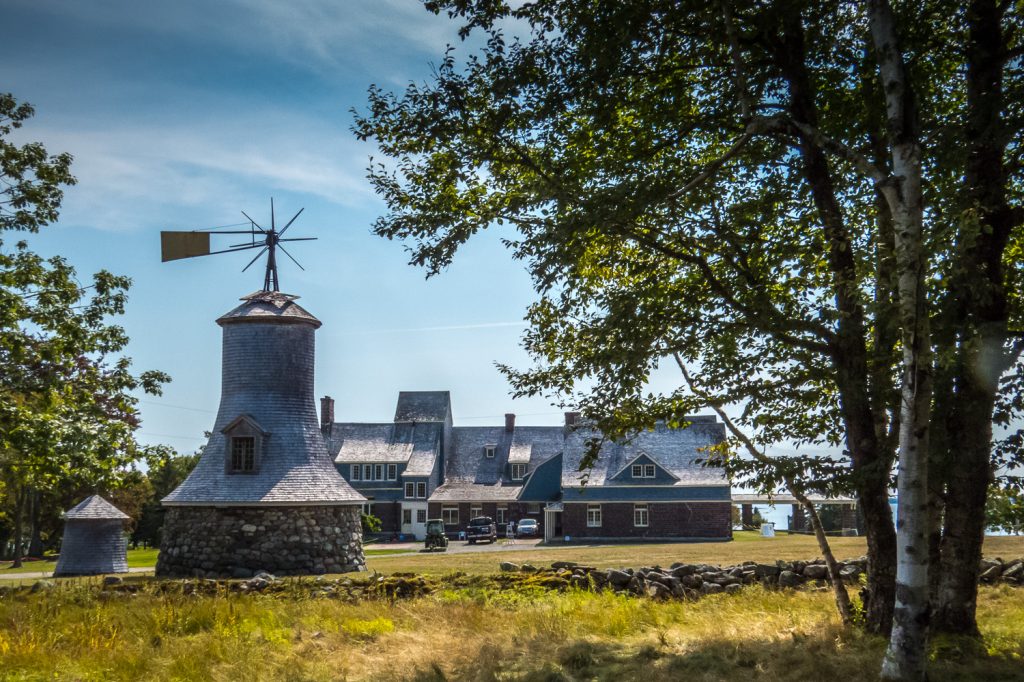
Minister’s Island, St. Andrews
We risk confirming that old, tired, tedious label of New Brunswick as a “Drive‑Through Province,” a space to pass through rather than a place to pause, explore, learn, appreciate.
But our history tells a different story. It tells us that parks were created by people who believed in the value of beauty and conservation, rest and connection. People like Harrison, Daggett, Pierce, Christie, Daigle, Snodgrass, Tate—and the employees who work at these places, the volunteers who love them, the supporters who donate to them, and the thousands upon thousands who return, year after year, because these places matter. So, I hope that communities push back and advocate once more for what they value, and that a new crop of stewards will rise to defend these public spaces.
If we let these parks and heritage sites disappear, we lose more than campsites and museums. We surrender the stories, the stewardship, and the sense of belonging that have shaped this province for nearly a century.
The question before us is simple: will we honour that legacy—or abandon it?